Who I am
I am a TS/SCI-cleared U.S. Navy Lieutenant and Cyber Operations graduate with direct operational cybersecurity experience across mission-critical DoD systems.
TS/SCI-cleared Navy Lieutenant with direct operational DoD cybersecurity experience — STIG, ACAS, POA&M, RMF, and ATO — now building hands-on detection engineering capability ahead of a full-time civilian transition.
My cybersecurity background combines operational DoD system security responsibility, formal cyber education, and documented detection engineering work.
I am a TS/SCI-cleared U.S. Navy Lieutenant and Cyber Operations graduate with direct operational cybersecurity experience across mission-critical DoD systems.
I’ve led STIG compliance, ACAS vulnerability remediation, POA&M management, ATO sustainment support, inspection readiness, and CANES enterprise infrastructure execution while also building hands-on detection engineering capability in a self-directed Active Directory lab.
I prioritize technical rigor, configuration discipline, clear documentation, and calm execution under pressure. That approach has been central to both operational cyber responsibilities and high-reliability engineering watchstanding.
Across these roles, the common thread has been cybersecurity execution, technical leadership, and dependable performance in mission-critical operational environments.
Command-designated cybersecurity representative responsible for enterprise cybersecurity readiness and remediation execution.
Support reactor electrical maintenance planning, engineering readiness, technical review, and department-level coordination for A4W nuclear propulsion electrical systems.
Led a 20-person technical division responsible for nuclear propulsion electrical systems.
Concurrent qualification held while serving in other Carl Vinson engineering roles, with delegated authority for safe propulsion plant operation.
Supported threat identification and email analysis in a real-world enterprise setting.
Supported software and technical research work for critical-infrastructure and national-security analysis.
These projects come from documented lab work, with a focus on detection engineering, telemetry analysis, and adversary emulation.
Built a VMware-based Active Directory lab with centralized Sysmon telemetry and Wazuh alerting. Authored and validated custom detections for controlled adversary behaviors including PowerShell abuse, scheduled-task persistence, and SMB lateral movement.
These visuals give a clearer view of the lab environment, telemetry flow, and the type of evidence behind the portfolio work.
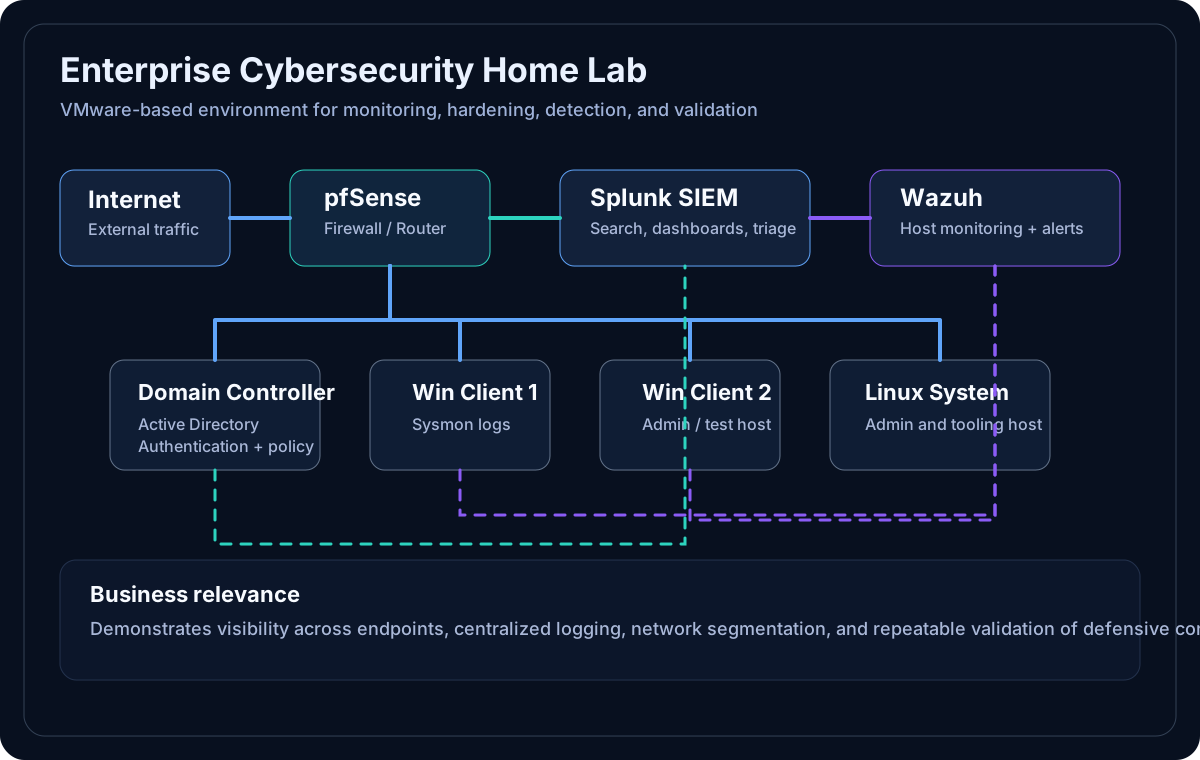
A VMware-based enterprise-style lab with Active Directory, Windows endpoints, Wazuh, and Sysmon instrumentation.
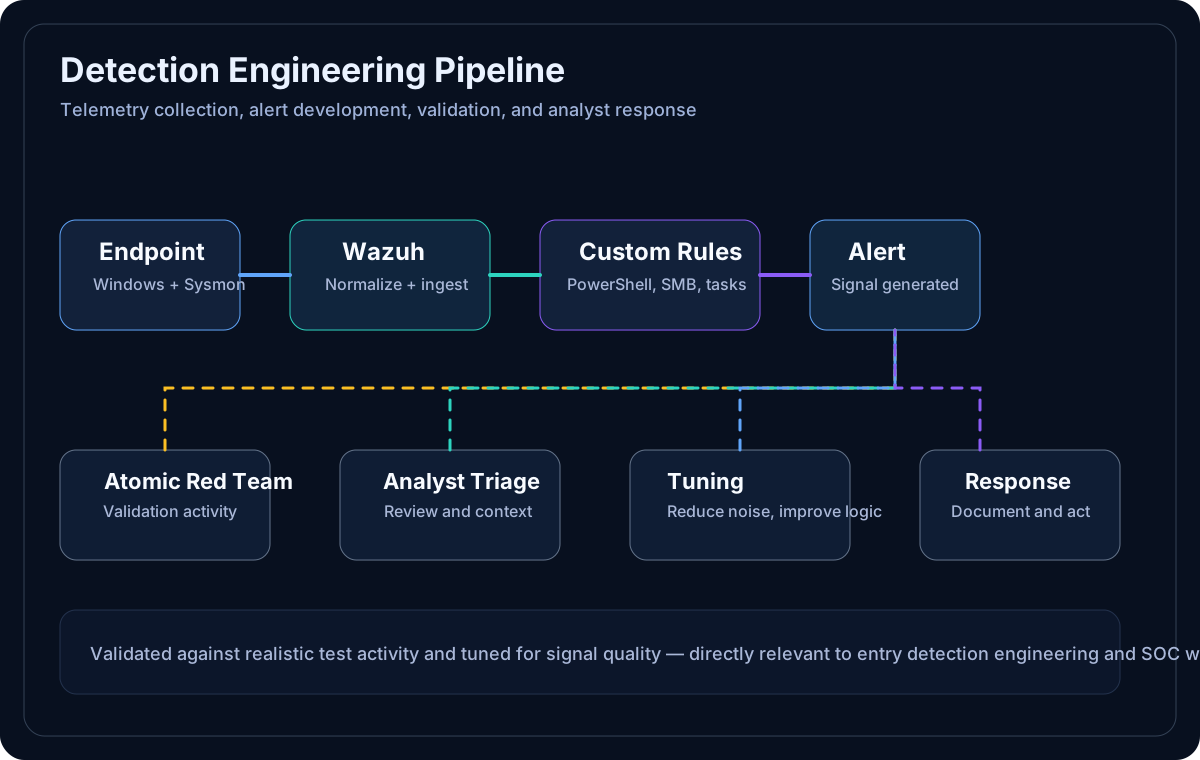
Sysmon telemetry flows into Wazuh and custom rules are validated against controlled adversary activity using Atomic Red Team.
Core capabilities across cyber systems engineering, DoD cyber processes, hardening, infrastructure, and detection tooling.
Security Baselines, Security Control Assessment, Security Architecture Support, Technical Analysis, Configuration Governance, Root Cause Analysis
NIST/RMF-Aligned Processes, ATO Sustainment, POA&M Management, Risk Acceptance Documentation, Inspection Readiness, Continuous Monitoring
ACAS, STIG Checklists, CAT I/II/III Findings, HBSS Oversight, Vulnerability Remediation, Remediation Validation
Windows, Linux, Active Directory, VMware, Virtualized Systems, CANES, Network Devices, Applications, Standalone Systems
Wazuh, Atomic Red Team, MITRE ATT&CK, Wireshark, Nmap, Burp Suite, Metasploit, Git, Python, C, C++, Java, JavaScript
I’m targeting Cyber Systems Engineer and cyber defense roles where I can apply operational DoD cybersecurity experience alongside detection engineering and defensive telemetry analysis.
Public projects, technical writing, and supporting materials make it easier to see how I think and what I’ve built so far.
GitHub-documented detection engineering, technical analysis, and defensive validation work.
View GitHub profileA concise overview of my background, technical direction, and current qualifications.
Open resume PDFA straightforward overview of education, certifications, and where I’m headed next.
United States Naval Academy
Available for full-time civilian cybersecurity roles beginning early 2027.
I'm always glad to connect with people working in cybersecurity, particularly in security engineering, cyber defense, detection engineering, and adversary emulation.